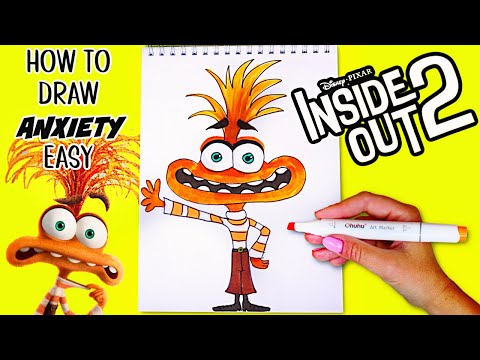
Title: Disney PIXAR Inside Out 2 How to Draw ANXIETY Easy
Channel: SWEET and CRAFTY
Disney PIXAR Inside Out 2 How to Draw ANXIETY Easy by SWEET and CRAFTY
anxiety inside out 2 outline, anxiety inside out 2 outline drawing, inside out 2 characters, inside out 2 release date
Anxiety Inside Out 2: The Shocking Truth They Don't Want You to Know
Unveiling the Unspoken: The Real Story Behind Anxiety Inside Out 2
It’s time to talk. We’re diving deep. Let's explore the emotional landscape that Disney Pixar's Inside Out 2 subtly portrays. This isn't just a kids’ movie. It's a mirror reflecting the raw, often messy, reality of our inner worlds.
The Unexpectedly Complex Terrain of Teenage Emotions
Navigating adolescence feels like traversing a jungle. Suddenly, familiar pathways vanish. New feelings emerge, and the terrain transforms. Anger, Joy, Fear - they all play a part. Furthermore, Inside Out 2 doesn't shy away from the complexity. The film spotlights the internal struggles of a teenager. It does this in a way that is both imaginative and astute.
The Intriguing Introduction of "Anxiety"
Meet Anxiety. She is a new emotion, and a dominant force. She represents the feeling of constant worry. This isn’t typically a welcomed emotion. However, let's consider its importance. The move explores the idea of controlling thoughts. It also delves into the power of anticipation. The movie encourages us to understand this emotion. It helps us navigate the emotional chaos.
Beyond Simple Narratives: Layers of Psychological Depth
Don’t be fooled. Inside Out 2 is deeper than it initially appears. The film is packed with layers. For example, it discusses the intricacies of teenage experiences. Also, it explores the importance of self-discovery. Moreover, it shows the value of managing our inner turmoil. The movie masterfully explores the development of identity. The film underscores the growth of emotional regulation.
The Unsettling Truth About Perfectionism
One key theme is the relentless pursuit of perfection. Specifically, teenagers often feel pressure to be "perfect." This pressure is sometimes self-imposed. Other times, it's driven by outside forces. The movie shows how this can be detrimental. It can even lead to anxiety. Besides, it reveals how our emotions impact us. It's truly a delicate balance.
The Delicate Dance Between Emotions and Identity
The film is a brilliant depiction of identity. It is a constantly evolving process. It's not a fixed state. Instead, it's a dynamic interplay of emotions. This is similar to real life. The movie shows how our sense of self adjusts. It changes as we experience various feelings. The film is a compelling portrait of emotional growth.
The Powerful Message: Embracing Imperfection
The core message of the story is one of acceptance. Moreover, it’s about embracing imperfection. This is truly vital. Life isn't about eradicating negative emotions. It's about learning to coexist with them. The movie highlights the importance of resilience. It shows us how we grow when we allow ourselves to feel.
The Shocking Reality: Mental Health Matters
Inside Out 2 subtly tells us how important mental health is. It openly tackles important themes. It is a conversation starter. Moreover, it invites us to discuss our feelings. The film encourages viewers to seek help when needed. It's a powerful way to support well-being.
Why This Matters Now More Than Ever
In today's world, anxiety is rampant. It is important to understand how this impacts us. This movie gives our youth a framework for discussion. It's a helpful guide. We can use it to talk about our feelings. It can provide clarity. We should use this opportunity for openness.
Beyond the Screen: Practical Takeaways
There are valuable takeaways from Inside Out 2. First, acknowledge your emotions. Don't try to suppress them. Second, talk about your feelings. This is essential, because it is supportive. Furthermore, practice healthy coping mechanisms. Seek professional help when you need it. Embrace your imperfections. Be kind to yourself.
Conclusion: A Timely and Necessary Exploration
Inside Out 2 isn't just an animated film. It’s a cultural touchstone. It offers a fresh perspective. The movie delivers a thoughtful exploration. It is a valuable resource for parents, educators, and young people. It is a must-see movie. The film is an important reminder: it's okay not to be okay.
Doechii Anxiety Mix: The Ultimate Chillwave Remedy?Anxiety Inside Out 2: The Shocking Truth They Don't Want You to Know
Hey everyone, it's me, your friendly neighborhood brain-whisperer! We're diving deep today, folks, and trust me, the water’s a little choppy. We're talking about Anxiety Inside Out 2 – not just the movie, but the real story it's telling us, the one that goes beyond the colorful characters and the catchy tunes. We’re peeling back the layers on how this sequel might subtly – and sometimes not-so-subtly – reflect the very real anxieties we all grapple with. Get ready, because we’re unearthing some truths that might just make you look at your own mind a little differently.
1. The Big Question: Does Inside Out 2 Really Get Anxiety?
Alright, let's be real. Hollywood often simplifies complex issues, right? So, the burning question is: does Inside Out 2 actually get anxiety? Does it portray it accurately, or is it just another feel-good flick that glosses over the messy reality? We'll explore how the movie might represent the different facets of anxiety, and whether it successfully captures the internal battles we all face. For instance, does it show the constant worry, the racing thoughts, and the physical manifestations that often accompany anxiety? Or does it stop short, focusing only on the surface level? I think you'll be surprised!
2. Beyond Joy and Sadness: Introducing the Anxiety Squad
We all know Joy and Sadness, right? They're the OG emotions running the show in Riley's brain. But in Inside Out 2, we’re introduced to new characters, including Anxiety. Now, this is where things get interesting. How is Anxiety portrayed? Is it a villain, a misunderstood hero, or something in between? Does the movie capture the nuance of anxiety, or does it fall into the trap of painting it as purely negative? Personally, when I was younger, I viewed my anxiety as a monster, a shadowy figure lurking in the corners of my mind. Let's see if Inside Out 2 offers a more evolved perspective.
3. The Subtlety of Sabotage: When Anxiety Takes the Wheel
One of the most fascinating aspects of anxiety is how it can subtly, even sneakily, sabotage our thoughts and behaviors. It can make us second-guess ourselves, avoid social situations, and generally make life feel much harder than it needs to be. Does Inside Out 2 show this? Does it highlight how anxiety can hijack our decision-making processes, leading to self-doubt and a constant feeling of impending doom? Think of it like this – anxiety is that unwelcome backseat driver, constantly nudging us to make terrible decisions.
4. The Perfectionism Paradox: Anxiety and the Pursuit of Flawlessness
Perfectionism and anxiety are like two peas in a pod. The relentless drive to be perfect, to avoid making mistakes, is a major trigger for anxiety. Does Inside Out 2 delve into this connection? Does it explore how Riley's desire for perfection, fueled by societal pressures and internal expectations, fuels her anxiety? The movie could potentially offer a powerful message about the dangers of setting unrealistic standards for ourselves. I certainly struggled with this growing up and still catch myself from time to time.
5. The Physical Manifestations: Anxiety Beyond the Brain
Anxiety isn’t just a mental thing; it has real, physical consequences. It can manifest as a racing heart, a churning stomach, headaches, and a whole host of other uncomfortable symptoms. Does Inside Out 2 acknowledge the body-mind connection? Does it depict how Riley’s physical sensations are linked to her internal emotional state? Seeing this depicted accurately can be validating for those who experience anxiety, letting them know that they're not alone in their struggles.
6. Social Anxiety: The Silent Struggle in Inside Out 2?
Social anxiety is a beast, folks. The fear of being judged, embarrassed, or rejected can be incredibly debilitating. Will Inside Out 2 touch upon social anxiety? Could it explore Riley's feelings about fitting in, making friends, and navigating the complexities of teenage social circles? The potential here is huge, and the movie could offer valuable insights into how to manage social anxiety and develop healthier coping mechanisms.
7. The Power of Coping Mechanisms: Finding Your Inner Lighthouse
How does Riley cope with her anxiety? This is a crucial question. Does the movie showcase healthy coping mechanisms, like deep breathing, mindfulness, or talking to someone you trust? Or does it inadvertently glorify unhealthy strategies like avoidance or suppression? We need to see the characters using effective tools to manage their feelings. Coping mechanisms can be a lifeline when the waves of anxiety become too high.
8. The Role of Family and Friends: Building a Support System
Anxiety can be incredibly isolating. Having a strong support system of family and friends can make a huge difference in managing it. Does Inside Out 2 depict the importance of social connections? Does it show Riley reaching out to her parents, friends, or other sources of support? The movie has the potential to highlight the importance of communication, empathy, and understanding in helping someone who's struggling with anxiety. Remember – it's okay to ask for help.
9. The Truth About Therapy: Seeking Professional Support
Let's be honest, therapy can be a lifesaver. Does Inside Out 2 promote the idea that seeking professional help is a sign of strength, not weakness? Could it show Riley going to therapy or learning about anxiety management techniques? The film could subtly encourage viewers to consider seeking professional help if they are struggling with overwhelming symptoms. I'm a big advocate for therapy and it has helped me so much.
10. The Generational Divide: Anxiety in Different Age Groups
Anxiety affects people of all ages, but the triggers and manifestations can differ. Does Inside Out 2 bridge the gap between the experiences of children, teenagers, and adults? Could it explore how Riley's anxieties compare to those of her parents or other adult characters? It's important to understand that anxiety can present differently at various stages of life.
11. Media Literacy and Anxiety: Filtering the Noise
In today's digital world, we’re constantly bombarded with information. This can be particularly overwhelming for those with anxiety. Does Inside Out 2 touch upon the role of media in fueling anxiety? Perhaps it could hint at the importance of media literacy – being critical of what we consume and protecting our mental health from the constant barrage of news and social media.
12. The Brain as a Landscape: Visualizing Anxiety's Impact
How does Inside Out 2 visualize anxiety's impact on Riley's brain? Does it use creative imagery to show the constant chaos, the racing thoughts, and the emotional turmoil? Visualization can be a powerful tool for understanding and managing anxiety. The more we can see it, the more we can control it.
13. Beyond the Silver Screen: Inside Out 2's Impact on Conversations
Will Inside Out 2 spark conversations about mental health? Will it inspire people to talk about their experiences with anxiety, reduce the stigma, and encourage people to seek help? Its impact could extend far beyond the box office, creating a ripple effect of understanding and support.
14. The Ultimate Message: Hope and Resilience
Ultimately, what is the overall message of Inside Out 2? Does it offer a message of hope and resilience? Does it show Riley learning to manage her anxiety, accepting her emotions, and building a stronger, more resilient self? The film's core message could be a powerful reminder that even in the face of adversity, we can find ways to cope, heal, and thrive.
15. The Aftermath: Reflections and Takeaways
After watching Inside Out 2, what will we take away? What lessons will we learn about anxiety, emotional well-being, and the human experience? The film’s success will lie not only in its entertainment value, but also in its ability to resonate with audiences on a deeper, more personal level. It’s my hope that this film inspires discussions and helps us to better understand ourselves and others.
Closing Thoughts
So, there you have it! A glimpse into the potential truths hidden within Anxiety Inside Out 2. Remember, this is just a starting point for discussion, and I encourage you to watch the movie with an open mind – and maybe a box of tissues, just in case! Let's all strive to be a little kinder to ourselves and others, and to remember that it's okay not to be okay. Now, go forth and conquer your own internal landscape!
FAQs
1. Will Inside Out 2 accurately portray anxiety?
That's the million-dollar question! Based on trailers and initial buzz, it seems like the creators are taking a more nuanced approach to anxiety this time around. However, only time will tell if the film truly captures the full spectrum of the disorder.
2. What are some healthy ways to cope with anxiety?
Deep breathing exercises, mindfulness, regular exercise, spending time in nature, talking to a therapist or a trusted friend, journaling, and getting enough sleep are all great starting points. Experiment with different techniques to find what works best for you!
3. How can I help someone who is struggling with anxiety?
Listen without judgment, offer support, encourage them to seek professional help if needed, and be patient. Sometimes, simply being present and letting them know
Arabic Anxiety: Silent Suffering, Shocking SolutionsInside Out 2s Most Intense Moment Rileys Anxiety Breaks Loose Emotional Showdown

By UrbanProwler7676 Inside Out 2s Most Intense Moment Rileys Anxiety Breaks Loose Emotional Showdown by UrbanProwler7676
How Inside Out 2 Battles Anxiety Anatomy of a Scene

By The New York Times How Inside Out 2 Battles Anxiety Anatomy of a Scene by The New York Times
INSIDE OUT 2 psychology explained by therapist

By My Little Thought Tree INSIDE OUT 2 psychology explained by therapist by My Little Thought Tree

Title: Every Time Anxiety Did Something Horribly Bad To Riley In Inside Out 2
Channel: Miracle Charm
Every Time Anxiety Did Something Horribly Bad To Riley In Inside Out 2 by Miracle Charm
Is Your Anxiety Causing *These* Everyday Symptoms? (You Won't Believe #5!)
Anxiety Inside Out 2: The Shocking Truth They Don't Want You to Know
We understand. Anxiety whispers insidious truths; it warps perception and casts a long shadow over daily life. You're here because you're seeking answers, seeking validation, seeking escape from the crushing weight of worry. We offer more than just sympathy; we offer insight, a path forward, and a dismantling of the myths that perpetuate suffering. Welcome.
The Illusion of Control: Why Anxiety Thrives on False Security
The world is inherently unpredictable. We crave certainty, a sense of order. Anxiety, cunning and deceptive, preys on this fundamental human need. It manufactures a false sense of control, a belief that by anticipating, analyzing, and planning for every possible outcome, we can somehow conquer the unknown. This, however, is the very foundation upon which anxiety builds its fortress.
We create elaborate mental frameworks, meticulously designed to anticipate and neutralize perceived threats. We rehearse conversations, scrutinize social interactions days in advance, and run through every conceivable scenario in our minds. This hyper-vigilance, while seemingly protective, becomes a self-fulfilling prophecy. The more we anticipate the negative, the more our brains become primed to perceive it. The more we prepare for disaster, the more likely we are to interpret neutral events as signs of impending doom.
Consider the classic example of social anxiety. The individual, consumed by the fear of judgment, spends hours agonizing over their every gesture, every word. They meticulously analyze their appearance, their behavior, and the potential reactions of others. This intense self-focus, far from creating a favorable impression, actually generates anxiety. The more we worry about how we’re perceived, the less present we are, the less authentic we become, and the more awkward and self-conscious we feel. This reinforces the initial fear, creating a vicious cycle.
The illusion of control is not just about anticipating external events; it's also about controlling internal experiences. We try to suppress uncomfortable thoughts, feelings, and physical sensations. We tell ourselves to "calm down," to "stop worrying," to "get a grip." But this approach is often counterproductive. The more we resist our emotions, the more they intensify. The harder we try to control anxiety, the more it fights back. We become trapped in a Sisyphean task, constantly pushing a metaphorical boulder uphill, only to have it roll back down again.
The Biology of Fear: Understanding the Brain's Alarm System
Anxiety is not merely a psychological phenomenon; it's a deeply biological one. Our brains are wired for survival, and the amygdala, the almond-shaped structure in the limbic system, acts as the brain's primary alarm system. When the amygdala perceives a threat, it triggers the "fight-or-flight" response, a cascade of physiological changes designed to prepare the body for action.
The heart rate accelerates, the breath quickens, muscles tense, and the senses sharpen. Adrenaline surges through the bloodstream, providing a boost of energy. The body is primed for either confrontation or escape. In a life-threatening situation, this response is essential for survival. However, in individuals with anxiety disorders, the amygdala can become overly sensitive, firing alarms in the absence of genuine threat.
This heightened sensitivity can be triggered by a variety of factors, including genetics, early life experiences, and chronic stress. When the amygdala is constantly on alert, the body remains in a state of chronic arousal. This can lead to a range of physical symptoms, such as fatigue, headaches, digestive problems, and muscle tension.
Furthermore, the prefrontal cortex, the part of the brain responsible for rational thought and decision-making, can become impaired during an anxiety attack. This can result in difficulty concentrating, impaired judgment, and a sense of being overwhelmed. The individual may struggle to think clearly or to evaluate situations objectively.
Understanding the biology of fear is not meant to provide excuses; it is to offer context. It is vital to know that anxiety is not a sign of weakness or a personal failing, but a neurological phenomenon. When we understand the biological underpinnings of the disorder, we can develop more effective strategies for managing it.
The Hidden Costs of Avoidance: Escaping the Trap of Comfort
Avoidance is a core component of many anxiety disorders. When we experience anxiety, our natural inclination is to avoid the situations, objects, or thoughts that trigger it. This avoidance, however, is a double-edged sword. While it may provide temporary relief, it reinforces anxiety in the long run.
Think of it like this: imagine a child who is afraid of dogs. If the child avoids all contact with dogs, the fear will never have the opportunity to diminish. The child will never learn that dogs are not inherently dangerous. The fear will remain, and potentially even intensify, because the child never has the chance to see themselves capable of handling a dog.
Similarly, when we avoid anxiety-provoking situations, we deny ourselves the opportunity to develop coping skills and to challenge our negative thoughts. We remain trapped in a cycle of fear and avoidance. The more we avoid, the more our world shrinks.
Consider the individual with social anxiety who avoids social gatherings. They may feel relieved in the short term, but they miss out on opportunities for connection, friendship, and fulfillment. Their social skills may atrophy, making future social situations even more challenging. The range of their lives is reduced, their capacity for joy limited.
Avoidance also reinforces the belief that we're not capable of handling our anxiety. We begin to see ourselves as fragile, vulnerable, incapable of coping with challenges. This can lead to a loss of self-esteem and a sense of helplessness.
The true path to recovery lies not in avoidance, but in facing our fears. It's in gradually exposing ourselves to the things we find threatening, starting with small, manageable steps. This process, known as exposure therapy, allows us to learn that the feared outcome is unlikely to happen, and that we are, in fact, capable of handling our anxiety.
Challenging Cognitive Distortions: Re-Writing the Narrative
The thoughts that fuel anxiety are often distorted. They're not based on reality but on emotional reasoning, catastrophizing, and other cognitive biases. These distorted thoughts can be incredibly powerful, shaping our beliefs, our emotions, and our behavior.
One common cognitive distortion is "catastrophizing," the tendency to assume that the worst possible outcome will occur. For example, the individual who fears public speaking may catastrophize that they will freeze on stage, forget their lines, and be humiliated. They may not consider other possibilities, such as delivering a competent speech or even finding it enjoyable.
Another common distortion is "overgeneralization," drawing broad conclusions based on a single event. Someone who fails a test may conclude that they are a failure in all areas of their life. They haven’t considered that perhaps the test was unusually hard, or that they had a bad day.
"Personalization" is the tendency to take things personally, even when they have nothing to do with you. Someone who sees a group of people laughing may assume they are laughing at them, even though there is no evidence to support this.
The first step in challenging cognitive distortions is to become aware of them. Pay attention to the thoughts that are fueling your anxiety. Are they realistic? Are they based on evidence? What is the evidence that contradicts them?
Once you've identified the distortions, you can begin to challenge them. Ask yourself:
- What is the evidence for this thought?
- What is the evidence against this thought?
- What are the alternative explanations?
- What is the worst-case scenario? Could I handle it?
- What is the best-case scenario? What is the most likely scenario?
By challenging your distorted thoughts, you can begin to re-write the narrative. You can develop a more balanced and realistic perspective. You can learn to see situations more objectively and to respond to them in a more adaptive way.
Practical Strategies for Managing Anxiety: Building Resilience
While understanding the nature of anxiety is crucial, it's equally essential to develop practical strategies for managing it. These strategies can help to reduce the intensity of anxiety symptoms, improve coping skills, and build resilience.
- Mindfulness and Meditation: These practices involve paying attention to the present moment without judgment. Mindfulness can help to reduce rumination, calm the nervous system, and promote emotional regulation. Simple, guided meditations can be found online.
- Deep Breathing Exercises: When anxious, our breathing becomes shallow and rapid. Deep breathing exercises can counteract this, activating the parasympathetic nervous system and promoting relaxation. Practice diaphragmatic breathing, focusing on breathing deeply into your belly.
- Physical Exercise: Physical activity releases endorphins, which have mood-boosting effects. Exercise can also help to reduce muscle tension and improve sleep. Aim for at least 30 minutes of moderate-intensity exercise most days of the week.
- Healthy Diet: Nourishing your body with whole, unprocessed foods can support overall well-being and reduce anxiety symptoms. Limit your intake of caffeine, alcohol, and processed foods, which can exacerbate anxiety.
- Sleep Hygiene: Prioritize adequate sleep. Establish a regular sleep schedule, create a relaxing bedtime routine, and ensure your bedroom is dark, quiet, and cool.
- Journaling: Writing down your thoughts and feelings can help you to process them in a healthy way. Journaling can also help you to identify patterns in your anxiety and to track your progress.
- Social Support: Connect with friends, family, or support groups. Sharing your experiences with others can help you to feel less alone and to gain new perspectives.
- Professional Help: Don
